








Categories
How to Get a Complex Income Mortgage

If you have a complex income profile, the size of your mortgage offer can sometimes bear little resemblance to your actual income. For example, a company director may take a modest basic salary while leaving healthy retained profits in the business; or a hard-working professional might supplement a PAYE salary with bonuses, commission, overtime, and even additional rental income.
On paper, you are financially strong, but sometimes when you put those figures through an inflexible mortgage calculator, much of that income suddenly seems irrelevant.
At Clifton Private Finance, we understand how to present complex income applications clearly.
We work with the full UK marketplace of high-street banks, private banks, and specialist mortgage lenders to find the right lender for your personal circumstances and secure a mortgage that reflects what you can genuinely afford.
Get a Mortgage Quote
Complete the simple form to receive tailored mortgage options.
Loading form...
Complex Income Mortgages at a Glance
- When income does not meet standard criteria: A complex income mortgage is designed for borrowers whose earnings do not fit the standard full-time employment position assumed by many mainstream lenders.
- Multiple income streams: Complex income may include bonuses, commission, overtime, dividends, retained company profit, investment income, foreign income, benefits, rental income, or earnings from several jobs.
- Affordability assessments vary: With a complex income mortgage, different lenders can reach very different mortgage sums and affordability calculations even when your income remains the same.
- Consistency matters: A well-supported track record is important. Lenders want evidence that the income is consistent and reliable.
- Independent advice is essential: Working with a specialist mortgage broker like Clifton Private Finance gives you access to lenders who understand your complex income position and have underwriting to take it into account.
Table of Contents:
1. What Is a Complex Income Mortgage?
2. What Counts as Complex Income?
3. How Much Can You Borrow with a Complex Income Mortgage?
4. How to Get a Complex Income Mortgage
5. Complex Mortgage Eligibility and Affordability
6. Documentation for a Complex Income Mortgage
7. Why Use a Specialist Mortgage Broker?
8. Get a Complex Income Mortgage with Clifton Private Finance

What Is a Complex Income Mortgage?
A complex income mortgage is a specialist mortgage solution for applicants whose income profile doesn’t meet traditional lender criteria. Rather than a distinct product in its own right, a complex income mortgage requires specialist lender underwriting to better account for your full spread of income streams.
A mortgage with complex income can be used for a standard residential purchase, remortgage, second home, or buy-to-let investment.
For many applicants, the difficulty is not that the income is unreliable; it’s that the income comes from more than one source, changes from month to month, or simply requires additional work to understand and validate.
Many high-street lenders use automated systems designed to process straightforward applications efficiently. Their underwriting models may only recognise your basic salary and fail to consider your other earnings, leading to your borrowing capacity being considerably reduced.
At Clifton Private Finance, we work with mortgage lenders who specialise in complex cases. We have strong relationships with mortgage lenders who specialise in assessing non-standard income rather than relying only on automated affordability calculations and high-street criteria.
As a result, they are able to offer mortgages through more flexible underwriting to build a more comprehensive picture of your finances. Many private and specialist lenders will also consider varied income sources that automated models may miss.

What Counts as Complex Income for a Mortgage Application?
For lenders, complex income simply means earnings that come from multiple sources. With most standard mortgages relying on a clear PAYE salary, anything that’s outside that simplified structure can be defined as complex.
A complex income mortgage doesn’t have to mean you don’t have a PAYE role either. In fact, it often means that you have a PAYE salary plus additional income streams. Once you add extra income beyond that core basis, it becomes complex.
It can include:
- Bonuses, commission, and overtime: Variable earnings may form a substantial part of your annual pay, but not all lenders consider them. Specialist lenders take the time to assess their type and how regularly they are received, giving them the flexibility to determine what percentage or averages may be used to determine your affordability.
- Multiple income streams: Professionals may combine a main role with contract work, consultancy, freelance projects, directorships, or other second jobs. These secondary income streams can increase borrowing capacity when properly included.
- Self-employed or contractor income: Sole traders, contractors, and partners may have fluctuating self-employed earnings, seasonal income, and legitimate expenses that make annual figures harder to understand than a PAYE salary. An SA302 may not provide a clear picture by itself.
- Limited company income: A limited company director may receive a mixture of salary and dividends while leaving net profits in the company. For directors of limited companies, certain lenders will consider retained profits when assessing your financial position, potentially avoiding the need to extract additional income and incur an unwanted and unnecessary tax payment.
- Rental income: Rent from one property or a larger portfolio can be considered alongside other earnings. Lenders may review tenancy agreements, other existing mortgages, and the costs of maintaining and managing the properties to accurately evaluate the additional income stream.
- Investment income: Regular returns from shares, trusts, pensions, or other investments may support an application if both the history and future income forecasts can be effectively documented.
- Foreign income: UK residents, foreign nationals, and expats may earn in foreign currencies, easily rejected by high-street banks. Specialist mortgage lenders can apply an exchange-rate adjustment to protect against currency movements once foreign currency income is validated.
- Benefits and allowances: Some lenders accept benefit income, including Personal Independence Payment (PIP), child benefit, maintenance payments, and disability living allowance, though the percentage of benefit income used for affordability calculations and evidence required will vary; official award letters and bank statements are typically used to verify this income.
Individually, any of these income streams may be quite simple, but as multiple income streams increase, so does lender risk and the need for specialist underwriting. Having different complex incomes does not automatically make you a high-risk borrower, but it does mean that the application needs to be presented to a lender with the experience to consider the complete picture.

How Much Can You Borrow with a Complex Income Mortgage?
Most borrowers can initially borrow around 4.5 to 5 times the annual income accepted by lenders. In some circumstances, higher income multiples may be available, particularly for high earners and professionals who can demonstrate strong income stability.
However, a high multiple is of little help if lenders do not understand and ignore half your earnings.
What you can borrow depends on:
- Which income sources lenders accept.
- The percentage of variable earnings used
- Whether lenders average one, two, or three years of figures for their calculations
- Your deposit and loan-to-value ratio (LTV)
- Existing debts and other regular expenses that impact affordability
- Your credit history
It’s important to get a complex mortgage you can genuinely afford. As with any other mortgage product, your home may be repossessed if you fail to meet your mortgage repayment obligations.
How to Get a Complex Income Mortgage: Our Process
Every complex income case begins by exploring the details. At Clifton Private Finance, we give each of our clients a dedicated mortgage broker and single point of contact throughout the mortgage application process.
We take the time to understand your finances, organise the supporting evidence, and present your case to lenders in the clearest possible way.
Get a Mortgage Quote
Complete the simple form to receive tailored mortgage options.
Loading form...
1. Initial Assessment and Income Profile Review
We begin with a comprehensive assessment of your income, outgoings, property plans, and wider circumstances with a dedicated broker from our team of mortgage experts.
This forms the start of the mortgage assessment process, where income history, consistency, and affordability are reviewed before approaching lenders.
Your adviser will:
- Identify every viable source of income and how long you have received it
- Explore your deposit, existing debt, credit history, and expected mortgage repayments
- Calculate how much you may be able to borrow using different lender approaches
- Explain the documents needed to support each part of your complex income
2. Market Search and Lender Selection
Not all lenders treat complex income in the same way.
Using our whole-of-market access and deep understanding of lender criteria, we will:
- Identify the banks, private banks, and specialist lenders that fit your income profile
- Compare borrowing capacity, mortgage rates, terms, and flexibility
- Discuss the case directly with underwriters where appropriate
- Secure a decision in principle (DIP), giving you the confidence you need to move forward
3. Valuations and Legal Work
Once you have found the property and your offer is accepted, we help coordinate the next stage.
We will:
- Submit the full, carefully packaged mortgage application
- Liaise with the lender throughout underwriting and answer further questions
- Maintain communication with valuers, conveyancers, and other parties
- Help resolve any issues with documentation or income verification
4. Completion and Release of Funds
Following the formal mortgage offer, we remain alongside you through to completion.
Your dedicated mortgage broker will:
- Review the mortgage offer and help you understand its terms
- Keep communication open between the lender and legal teams
- Monitor the final stages to reduce avoidable delays
- Confirm completion and remain available for future mortgage advice and refinancing
Case study: Read our case study below detailing how we secured our client a new mortgage without a recent tax return, saving him thousands on interest in the process.

Complex Mortgage Lender Eligibility and Affordability
There is no universal eligibility formula for complex income or complex mortgages. Each lender has its own assessment rules and requirements, and these can change with the market.
One lender may use 50% of commission or overtime, another 75%, and certain lenders may use 100% where there is a strong track record.
For limited companies, some mortgage lenders assess dividends alone; other lenders consider guaranteed pay plus retained company profit. Foreign income may be accepted in one currency but rejected in another, while mainstream lenders may not accept it at all.
Typically, lenders assess:
- The stability and history of each of your income sources
- Whether your earnings are increasing, stable, seasonal, or declining
- The confidence that your income will continue over the mortgage term
- How well your supplied figures are supported by your accounts and bank statements
- Your full affordability, including existing debt, financial commitments, and your dependants
- Your deposit size, credit history, and property type
This case-by-case assessment style means a rejection or disappointing response from one lender does not mean you cannot get a mortgage. It may simply mean that your application was not presented to a suitable lender.
Example: How Lender Criteria Can Change Your Borrowing Capacity
Consider Priya, who receives a £55,000 basic salary and has earned an average of £30,000 in annual commission over the past two years.
Her total average income is £85,000, but different mortgage lenders assess the commission differently:
|
Lender Assessment |
PAYE Considered |
Commission Considered |
Assessed Income |
Borrowing at 4.5x |
|
PAYE only |
£55,000 |
£0 |
£55,000 |
£247,500 |
|
50% of commission |
£55,000 |
£15,000 |
£70,000 |
£315,000 |
|
75% of commission |
£55,000 |
£22,500 |
£77,500 |
£348,750 |
|
100% of commission |
£55,000 |
£30,000 |
£85,000 |
£382,500 |
There is a £135,000 difference in how much Priya could borrow depending on which lender she approaches, despite there being no actual change in Priya’s income.
This shows why matching a mortgage with complex income to the right lender matters as much as the expected income multiple.
At Clifton Private Finance, our knowledge of the full UK mortgage market means we will be able to place your application with the most suitable lender.
Please note: The figures above are illustrative only. Lenders will complete a full affordability assessment and stress-test the repayments before making a final mortgage offer.
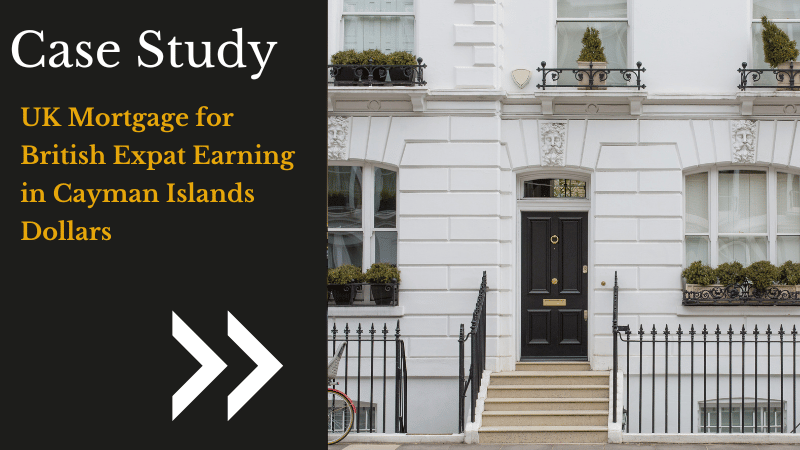
Case study: Read our case study below on how we secured a UK mortgage for a British expat earning in Cayman Islands dollars.
Documentation Requirements for a Complex Income Mortgage
When declaring complex income, consistency and clear supporting evidence are the main priorities. The exact documents depend on how you earn, but most important information can be verified easily.
Thankfully, digital records mean the old days where huge bundles of paperwork had to be kept no longer exist!
Depending on your income sources, lenders may request:
- PAYE salary, bonus, commission, and overtime: Recent payslips, P60s, employment contracts, bonus or commission statements, and bank statements showing payments received
- Self-employment: SA302 tax calculations, tax returns, business accounts, and personal bank statements. Some lenders work from the latest year, while others average self-employed income across two or three years. Our guide explains how to download the relevant tax documents
- Limited companies: Full company accounts, an accountant’s certificate, dividend vouchers, business bank statements, and evidence of retained profits or net profits if relevant
- Rental and investment income: Tenancy agreements, property portfolio details, mortgage statements, tax documents, and evidence of regular income received. Lenders may also want to see outgoing expenses, such as management fees and invoices from maintenance work done
- Foreign income: Employment contracts, payslips, overseas bank statements, tax records, and accountant-certified translations for documents that are not in English
- Benefits or maintenance: Award letters, court orders or formal agreements, and bank statements showing payments of ongoing support
- Second jobs and additional income streams: Contracts, payslips, invoices, tax records, and evidence showing a sustainable track record
Borrowers who have only recently become self-employed, changed roles, or added a secondary income source may still be able to get a mortgage, provided you can supply the necessary evidence.
Case study: Read our case study below on how we secured a £600k mortgage for high-earning British expats earning in two foreign currencies
Why Use a Specialist Mortgage Broker for a Complex Income Mortgage?
Finding suitable lenders for complex income and a complex mortgage is difficult without detailed knowledge of the mortgage lending market.
Approaching high-street lenders may often result in disappointment, and continuing to make mortgage applications in a short timeframe can damage your credit rating, making the search even harder.
Without experience, it’s hard to know whether a lender will use your annual bonus, accept income from multiple sources, account for business profit, or understand your self-employment earnings.
Many specialist mortgage lenders limit complex mortgage applications to specialist brokers.
A well-defined application made by an experienced broker reduces their administration time and smooths the process by providing them with a clear income profile, relevant documentation, and an explanation of unusual circumstances from the very start.
Clifton Private Finance is an award-winning, whole-of-market mortgage broker.
We offer:
- Access to the full UK market, including high street banks, specialist lenders, challenger banks, and private banks
- In-depth experience handling complex income mortgage applications for professionals, company directors, investors, expats, and other self-employed clients
- A thorough pre-approval process to identify and resolve challenges before the full mortgage application
- Established lender relationships that help us understand where different income streams will be properly considered
- A personal, dedicated broker who will support you through the assessment, application, valuation, and completion
- Ongoing support for future remortgaging and changes to your financial circumstances
Get a Mortgage Quote
Complete the simple form to receive tailored mortgage options.
Loading form...
Get a Complex Income Mortgage with Clifton Private Finance
A complex income profile should not prevent you from buying a property you can genuinely afford.
With the right presentation, documentation, and lender introduction, many lenders can consider varied income when the case is correctly presented.
This way, your bonuses, dividends, self-employed earnings, rental income, investment income, foreign income, benefits, and other income streams can all help you get a successful mortgage application.
At Clifton Private Finance, we help clients secure mortgages that truly reflect their financial position.
We will build a comprehensive picture of your earnings, compare complex mortgage options across the UK market, and work on your behalf to maximise your borrowing capacity.
From your first questions to completion and beyond, you will have an experienced adviser alongside you.
To discover how much you could borrow and which lenders are right for your complex income, book a consultation with an adviser at Clifton Private Finance today.